"The days of a yard sign and a Craigslist post are long gone.
How Olive Tree Achieved the Highest Rents in the Submarket Without Heavy ILS Spend for a Lease-Up
February 2026 | Property Management Perspective | Pacific Northwest Focus
Introduction: Marketing Is No Longer Optional in Multifamily
The multifamily landscape has changed dramatically. In 2024 alone, over 440,000 new apartment units were delivered across the United States, with an additional 900,000 units in the development pipeline.
The Pacific Northwest has not been immune to this surge, with new construction in Portland, Vancouver, Hillsboro, and Beaverton intensifying competition for quality renters.
For multifamily investors and property owners, this means a brutal reality: the days when a well-located property could fill itself with nothing more than a yard sign and a Craigslist post are long gone.
Today, a dedicated marketing team is not a luxury expense—it is one of the highest-ROI investments you can make in your asset. And the conversation has evolved far beyond search engine optimization and social media posts.
This article explores why a skilled marketing team is essential for protecting and growing the value of your multifamily investment. We go beyond the basics of SEO and social media to examine the rapidly emerging world of AI-powered search, Generative Engine Optimization, reputation management, data-driven leasing strategies, and—critically—what a meaningful marketing investment actually looks like in dollars and cents.
We also share a real case study from our own portfolio: how Olive Tree Property Management’s in-house marketing approach helped a achieve the highest rents in its Vancouver, WA submarket without relying on expensive listing platforms.
| 440,000+ New Units Delivered in 2024 | 71.5% of People Now Use AI for Search | 50,000% YoY Growth in AI Search Traffic to Apartments |
|---|
Beyond SEO and Social Media: What Modern Multifamily Marketing Actually Looks Like
Most property owners understand the basics: you need a website, you need to show up on Google, and you should probably have a social media presence. But in 2026, that baseline is table stakes. The teams that are winning leases are operating on a completely different level.
Reputation and Review Management
Online reviews are no longer just nice-to-have testimonials—they are a primary ranking factor for both traditional search engines and AI-powered platforms. Research from BrightLocal shows that improving a business’s rating from 3 stars to 5 stars can result in a 25% increase in clicks from Google’s local map pack. AI platforms like ChatGPT and Gemini actively pull from review data when recommending apartments to prospective renters.
A skilled marketing team actively monitors, responds to, and strategically solicits reviews across Google Business Profile, Apartments.com, Zillow, and other internet listing services. This is not work that can be handled as an afterthought by a leasing agent between tours—it requires a consistent, systematic approach.
Visual Storytelling and Virtual Tours
Properties featuring both community-level and unit-level virtual tours have been shown to reduce average vacancy by five days, translating to nearly $38,000 in annual savings per property. In markets like the Pacific Northwest, where renters increasingly relocate from out of state, the ability to lease sight-unseen through immersive 3D tours is a competitive necessity. A marketing team coordinates professional photography, video walkthroughs, Matterport scans, and virtual staging to present the property at its best across every channel.
Data-Driven Dynamic Budgeting
Modern multifamily marketing is not about setting a flat monthly budget and hoping for the best. Sophisticated teams analyze cost-per-lead and cost-per-lease metrics across every channel on a monthly basis, dynamically shifting spend based on seasonal demand, occupancy levels, and competitive conditions. During peak leasing season, digital ad spend may ramp up significantly; during stabilized periods, the budget shifts toward retention, reputation management, and content creation.
This data-driven approach is where a professional marketing team fundamentally outperforms a one-person-does-everything management model. According to industry benchmarks from Dyverse, leading multifamily operators allocate 45–55% of their marketing budget to digital advertising, SEO, and ILS advertising—but the allocation across those channels is constantly optimized based on performance data.
The AI Search Revolution: Why This Changes Everything
This is the section that most property owners and investors have not yet fully grasped—and it represents the single biggest shift in multifamily marketing since the rise of internet listing services.
How Renters Are Using AI to Find Apartments
Prospective renters are no longer just typing keywords into Google. They are asking AI tools conversational, highly specific questions like:
• “What are the best pet-friendly two-bedroom apartments near downtown Portland with in-unit laundry and a gym?”
• “Find me apartments in Vancouver, WA under $1,800 with covered parking and good reviews.”
• “Which apartment communities near Hillsboro have the shortest commute to Intel?”
These AI tools—ChatGPT, Google Gemini, Perplexity, Claude, and Microsoft Copilot—then search across dozens of sources including property websites, internet listing services, Google Business Profiles, social media, and review platforms to synthesize a personalized, conversational answer. The renter never has to click through ten blue links. The AI does the research for them in seconds.
The Numbers Are Staggering
According to a comprehensive analysis by Agency FIFTY3 covering nearly 22 million sessions across 390+ multifamily websites, AI-driven traffic to apartment community sites has grown by 50,000% year-over-year. ChatGPT alone drives 91% of all AI search referral traffic to apartment websites. And while AI search currently represents a small fraction of total traffic, the engagement quality is exceptional: users arriving from AI search platforms spend an average of 4.5 minutes per session with a 73.62% engagement rate and a 3.84% conversion rate.
Meanwhile, Google’s own AI Overviews now appear in more than 13% of all U.S. searches, providing summarized answers at the top of search results—often before the user ever scrolls to traditional organic listings.
“The way renters discover their next home is being fundamentally transformed by artificial intelligence. Visibility can no longer depend solely on traditional organic rankings.” — RealPage, January 2026
What Is Generative Engine Optimization (GEO)?
If SEO is the practice of optimizing your content for traditional search engines like Google, GEO is the practice of optimizing your content for AI-powered search engines and large language models. This is not a future trend—it is happening right now. Industry experts describe it as the most significant evolution in search since SEO itself.
GEO for multifamily means ensuring that your property’s website content, listing data, reviews, social media presence, and structured data are formatted in ways that AI tools can easily understand, extract, and cite. When a renter asks ChatGPT to recommend an apartment, the AI pulls from content that is conversational, well-structured, consistently accurate across platforms, and rich with the specific details renters actually care about—pet policies, floorplan dimensions, parking, pricing, and neighborhood lifestyle.
What a Marketing Team Must Do for AI Visibility
1. Conduct regular AI audits: Search for your properties on ChatGPT, Gemini, Perplexity, and Google AI Overviews to see how they appear and whether the information is accurate.
2. Maintain data consistency: Ensure that pricing, availability, amenities, and policies are identical across your property website, Google Business Profile, all ILS platforms, and social media channels. Any mismatch confuses AI tools and can result in inaccurate recommendations.
3. Create conversational, question-based content: Write blog posts, FAQs, and neighborhood guides that directly answer the hyper-specific questions renters are asking AI tools.
4. Implement structured data and schema markup: This technical layer helps AI platforms categorize and understand your property information at scale.
5. Optimize for Answer Engine Optimization (AEO): Structure content so it can be directly pulled into AI-generated answers, not just ranked on a results page.
6. Build an omnichannel presence: AI tools pull from everywhere—TikTok, Instagram, YouTube, review sites, and community blogs. A marketing team ensures your brand story is consistent and discoverable across all of them.
This is not work a single property manager can do on the side. It requires dedicated expertise, constant monitoring, and a sophisticated understanding of how AI platforms source, evaluate, and surface information.
“79 percent of agents believe being discoverable via AI is critical. 2026 will be the year of the Race for AI Discoverability.” — Inman Real Estate News, December 2025
C A S E S T U D Y
79 Unit Lease-Up — Vancouver, WA
How Olive Tree Property Management Achieved the Highest Rents in the Submarket Without Heavy ILS Spend
| $2,600 Average Rent Per Unit | 78 Units Community Size | $2.43M Annual Gross Potential Rent |
|---|
The Challenge: Commanding Premium Rents in a Competitive Market
The apartment was not designed to compete on price. At an average rent of $2,600 per unit—the highest in the submarket, including Downtown Vancouver—the property required a marketing strategy that matched its premium positioning. The traditional playbook of pouring money into internet listing services and hoping for volume would not work here. In fact, it would have actively undermined the strategy.
At this rent tier, vacancy is punishingly expensive. If just three units sit vacant one month longer than expected, that represents $7,800 in lost revenue. Stretch that across a quarter of slower absorption and the property is looking at over $23,000 in lost income. Marketing could not afford to be generic—it had to be precise.
Why Olive Tree Rejected the Heavy ILS Model
Premium ILS placement often creates exactly the wrong kind of traffic for a property commanding top-of-market rents. Heavy listing platform reliance tends to attract price shoppers, concession hunters, and comparison-driven browsers—renters who are shopping on price rather than quality. It reduces perceived exclusivity and pushes the property into algorithmic comparison pools alongside communities charging hundreds less per month.
When you are charging the highest rents in your market, you do not want to be “one of many listings.” You want to be a destination property. Olive Tree’s marketing team made a deliberate strategic decision: instead of renting visibility on listing platforms, they would build owned digital authority that attracted high-intent, higher-income renters searching specifically for premium living.
The target renter was searching for terms like “luxury apartments in Vancouver WA,” “high-end apartments near waterfront,” and “modern condos for rent Vancouver WA.” Olive Tree built content around lifestyle, quality, space, and differentiation—never discounts. That preserved perceived value and protected pricing power.
The Strategy: SEO + AI Search Authority, Not Just Visibility
As AI-driven search engines have evolved, they increasingly prioritize structured content, consistent business data, reviews and sentiment, contextual relevance, and local authority signals. Our marketing team built a site architecture and content strategy designed to win in this environment:
• Dedicated floorplan pages with detailed specifications, lifestyle-focused descriptions, and professional photography for every unit type.
• Amenity-specific content that went beyond bullet-point lists to tell the story of the living experience.
• Neighborhood positioning that connected the property to Vancouver’s waterfront, dining, and commute corridors.
• Fast mobile UX optimized for renters researching on their phones.
• Integrated review management that maintained high ratings and active engagement across Google and listing platforms.
Instead of relying on ILS algorithms, Olive Tree built authority inside Google’s ecosystem—and increasingly, inside the AI summarization systems that are rapidly becoming the primary way renters discover apartments. Search engines are transitioning from showing lists of links to providing synthesized answers. Properties with depth and consistency will appear in those summaries. Thin ILS listings will not.
In-House Marketing = Zero Lag Between Data and Execution
Because Olive Tree’s marketing was in-house and tightly integrated with property operations, the feedback loop between leasing activity and marketing strategy was immediate:
• Tour objections became website improvements within days, not weeks.
• Pricing resistance shaped messaging adjustments in real time.
• Amenity feedback from prospects became content themes that addressed objections before the next renter ever walked in.
• Lease conversion data refined keyword focus and ad targeting continuously.
There was no lag between insight and execution. That shortened lease-up time and protected the premium positioning in a way that an outsourced, ILS-dependent model simply could not match.
The Financial Impact
Benchmarking marketing spend at 3–5% of Gross Potential Rent provides clear context for the investment:
| Metric | Amount |
|---|---|
| Annual Gross Potential Rent (78 units × $2,600) | $2,433,600 |
| Marketing Investment at 3% of GPR | ~$73,008 annually |
| Marketing Investment at 5% of GPR | ~$121,680 annually |
| Cost of 3 Vacant Units for 1 Month | $7,800 |
| Cost of 3 Vacant Units for 3 Months | $23,400+ |
| Revenue Protected by Faster Lease-Up | Multiples of marketing spend |
By reallocating dollars away from expensive ILS packages and into AI-search-optimized content, structured SEO architecture, reputation velocity, conversion-focused website design, and analytics-driven lead quality tracking, Olive Tree created durable digital equity rather than rented exposure. That is a long-term asset that compounds over time, rather than an ongoing expense that disappears the moment you stop paying.
The Strategic Takeaway
If you can achieve the highest rents in your submarket without dominating expensive listing platforms—if you control your digital infrastructure, optimize for AI-era search behavior, align marketing tightly with operations, and focus on authority instead of volume.
What Does a Good Marketing Investment Actually Cost?
This is the question every property owner and investor needs to answer honestly. Marketing is a line item that often gets scrutinized during budget season—but underinvesting in marketing is one of the most expensive mistakes you can make in multifamily.
Industry Benchmarks for Multifamily Marketing Spend
Marketing budget benchmarks vary based on property class, unit count, market competitiveness, and whether a property is in lease-up or stabilized operations. Here is what the industry data tells us:
| Category | Stabilized Properties | Lease-Up Phase |
|---|---|---|
| Overall Marketing Budget (% of Revenue) | 3–10% | Up to 20% |
| Digital Advertising (PPC) — Class A | $300–$2,400/mo | 2.5–3x higher |
| Digital Advertising (PPC) — Class B | $300–$2,400/mo | 2.5–3x higher |
| Digital Advertising (PPC) — Class C | $185–$1,280/mo | 2.5–3x higher |
| Per-Unit Advertising Expense | $200–$1,000/unit | Higher end of range |
| Full-Service Marketing Agency | $1,000–$5,000+/mo | $3,000–$10,000+/mo |
| SEO + GEO Services | $500–$2,500/mo | $1,000–$3,000+/mo |
| Reputation Management | $200–$800/mo | $300–$1,000/mo |
The Real Cost of NOT Investing
Consider a straightforward example: a 100-unit community with an average rent of $1,500 per month. Each vacant unit costs $50 per day in lost revenue. If poor marketing results in just five additional vacancy days per unit across your annual turnover, you are losing $25,000 per year—likely far more than the cost of a professional marketing team or agency.
Now scale that up. A property with 200 units at $1,800 average rent with 50% annual turnover and ten extra vacancy days per unit due to weak marketing loses $180,000 in annual revenue. An investment of $30,000–$60,000 in professional marketing that eliminates even half of those excess vacancy days pays for itself multiple times over.
The Grand Vista example makes this even sharper. At $2,600 per unit, every vacant day costs $86.67. Every vacant unit-month costs $2,600. The margin for error is razor-thin at premium price points, which is precisely why the marketing investment is not optional—it is the mechanism that protects the entire revenue model.
Where to Allocate Your Marketing Dollars in 2026
Based on current industry data, the rise of AI search, and lessons learned from properties like Grand Vista, here is a recommended allocation framework for a multifamily marketing budget in 2026:
| Channel | % of Budget | Why It Matters |
|---|---|---|
| Property Website + SEO/GEO | 25–30% | Your highest-converting asset and AI search foundation |
| Digital Advertising (Google + Meta) | 20–25% | Drives immediate traffic; dynamically adjustable |
| Internet Listing Services | 10–15% | Targeted use, not blanket spend (Grand Vista model) |
| Reputation Management | 5–10% | Directly impacts AI recommendations and local rankings |
| Content + Visual Storytelling | 10–15% | Photography, video, virtual tours, blog content |
| AI Readiness + Auditing | 5–10% | GEO audits, schema markup, data consistency |
| Emerging Channels | 5% | TikTok, geofencing, influencer partnerships |
Why You Need a Dedicated Marketing Team (Not Just a Leasing Agent with Canva)
One of the most common mistakes multifamily owners make is assuming that marketing can be handled by existing property management staff. While on-site teams are invaluable for resident relations and day-to-day operations, expecting them to also manage digital advertising campaigns, AI search optimization, reputation monitoring, content creation, and performance analytics is unrealistic and counterproductive.
Specialized marketing teams—whether in-house like Olive Tree’s or through a dedicated agency—bring capabilities that are simply outside the skill set of most property management operations:
• Paid search campaign management across Google and Meta with continuous optimization.
• AI search auditing and GEO strategy to ensure visibility in ChatGPT, Gemini, and Perplexity.
• Professional content creation including video, 3D tours, and lifestyle-driven blog content.
• Brand development and market positioning that protects premium pricing
• Marketing attribution analysis and cost-per-lease tracking across all channels.
• Dynamic budget optimization based on real-time performance data and seasonal demand.
As one industry analysis put it: while it may seem cost-effective to rely on a property management team or reduce the marketing budget, it often leads to lower occupancy rates, more concessions, and reduced rental income.
This case study demonstrates the opposite approach—when marketing is treated as a strategic function integrated with operations, it becomes a revenue driver rather than a cost center.
A Note for Pacific Northwest Investors
For owners and investors in Oregon and Washington, the marketing imperative is especially acute. New supply continues to enter the Portland metro, Vancouver, and suburban markets. Oregon’s rent increase caps and evolving tenant protection legislation add complexity to pricing strategy, making it even more important to maximize occupancy and minimize vacancy days. Washington’s competitive suburban markets, particularly in Clark County, demand hyper-local marketing strategies that speak directly to the lifestyle and commute patterns of the renter population.
Olive Tree Property Management’s approach with Grand Vista offers a blueprint: invest in owned digital assets, optimize for AI-era search behavior, maintain tight integration between marketing and operations, and focus on building authority rather than renting visibility. A marketing team that understands these local dynamics—and that is already positioning your properties for AI discoverability—is not an overhead cost. It is an investment in the long-term performance and valuation of your asset.
Conclusion: Marketing Is an Investment, Not an Expense
The multifamily industry is at an inflection point. The rapid adoption of AI-powered search tools is fundamentally changing how renters discover, evaluate, and choose their next home. Properties that fail to adapt will become invisible—not gradually, but quickly.
A skilled marketing team does far more than post listings and run Google ads. They protect your asset’s digital reputation, ensure your properties are discoverable in the AI platforms that renters increasingly rely on, create compelling visual and written content that converts interest into leases, and optimize every marketing dollar for measurable returns.
Grand Vista is proof of concept. By building owned digital authority instead of leasing visibility through heavy ILS spend, Olive Tree Property Management achieved the highest rents in the submarket while maintaining efficient marketing costs. That is not an anomaly—it is the model for how successful multifamily marketing will work going forward.
Whether you are operating a 50-unit community or a 500-unit portfolio, the math is clear: the cost of professional marketing is a fraction of the revenue lost to extended vacancies, unnecessary concessions, and missed leasing opportunities. In 2026, the question is no longer whether you can afford a marketing team. The question is whether you can afford not to have one.
Sources & References
• Agency FIFTY3 – Multifamily Generative Engine Optimization Analysis (2025)
• RealPage – How AI Is Rewriting Multifamily Marketing (January 2026)
• RentVision – How AI Tools Gather Information About Your Apartment Community (2025)
• RentVision – Multifamily PPC Digital Ads Cost Benchmarks (2025)
• Multi-Housing News – GEO: What Apartment Marketers Need to Know (2025)
• Inman Real Estate News – Real Estate Predictions for 2026
• Charlesgate – The Difference Specialized Marketing in Multifamily Makes (2024)
• Market Apartments – Apartment Marketing Budget Guide (2025)
• Dyverse – Multifamily Marketing Budget Allocation Analysis (2025)
• Matterport – Modern Marketing for Multi-Family Properties Guide (2025)
• National Apartment Association – Marketing Budget Best Practices (2025)
• Digible – Understanding AI & GEO for Multifamily Marketing (2025)
Olive Tree Property Management | Pacific Northwest Multifamily Experts
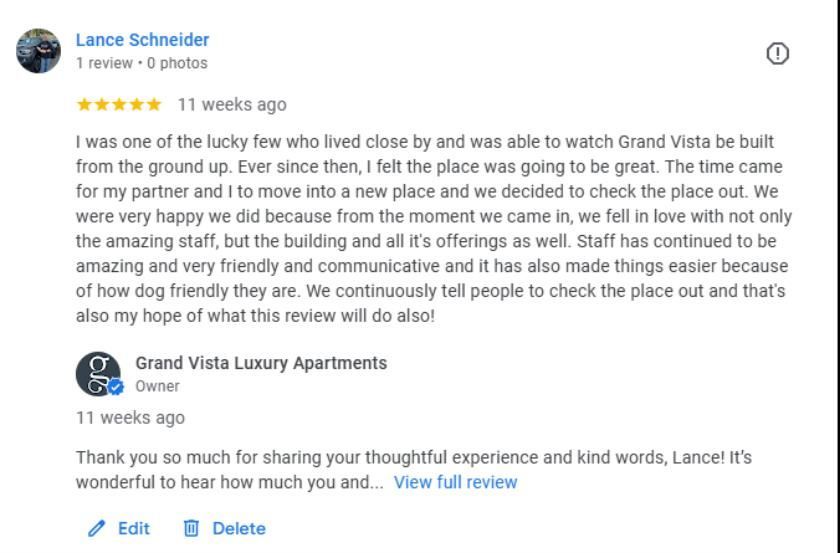
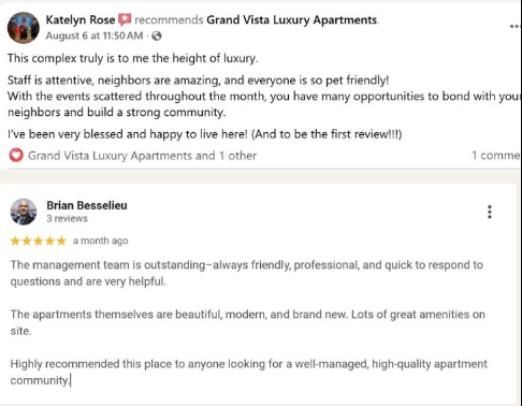
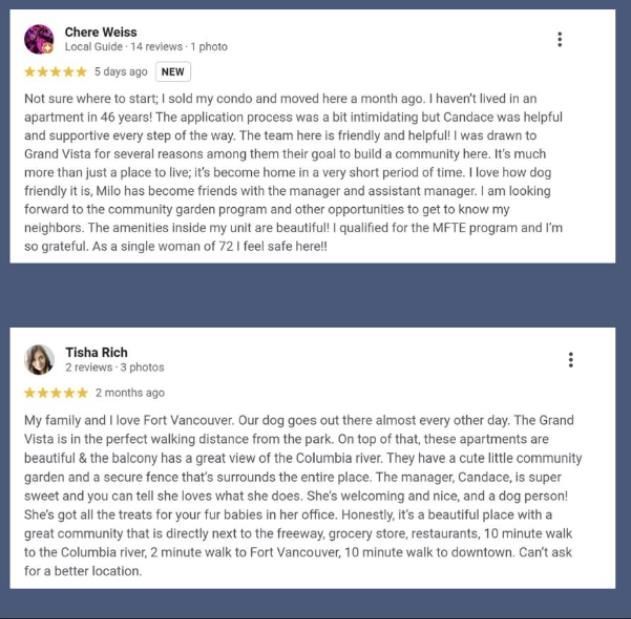
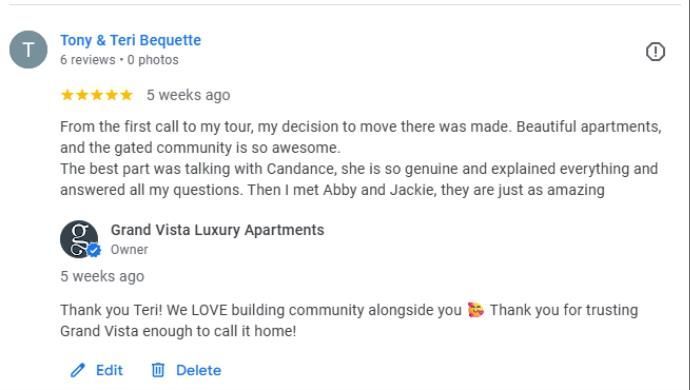
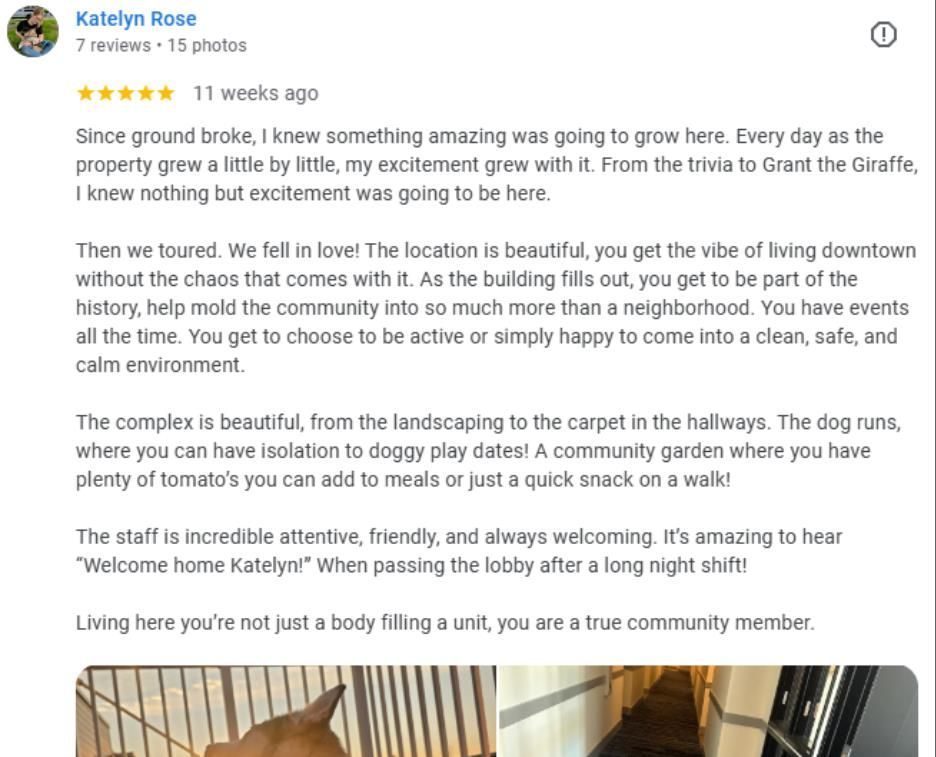
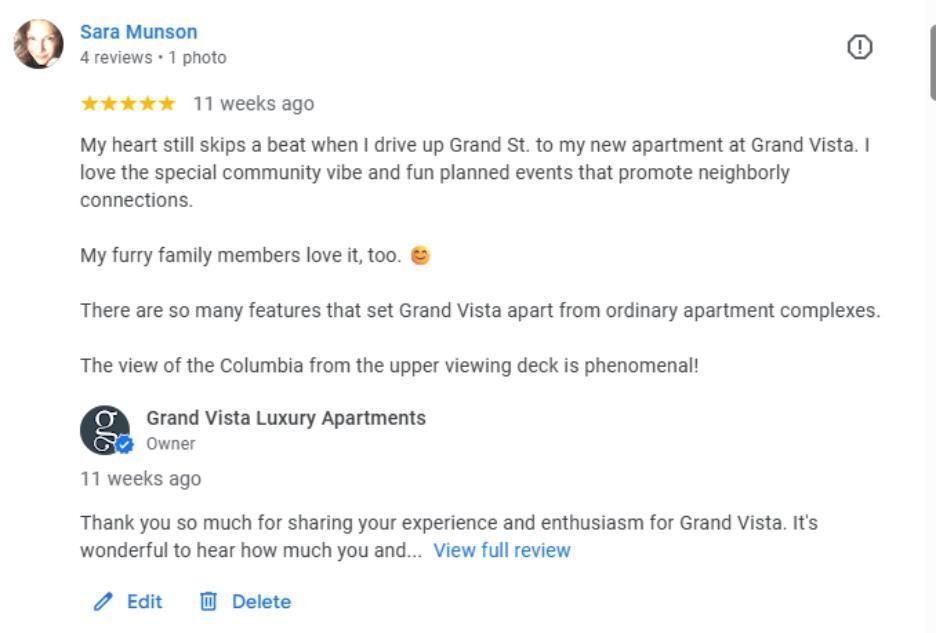
HIGHEST REVIEWS IN THE MARKET
- 21/22 5-star reviews ⭐⭐⭐⭐⭐



COMMUNITY
- Events:


- Halloween:




- Bingo Night:


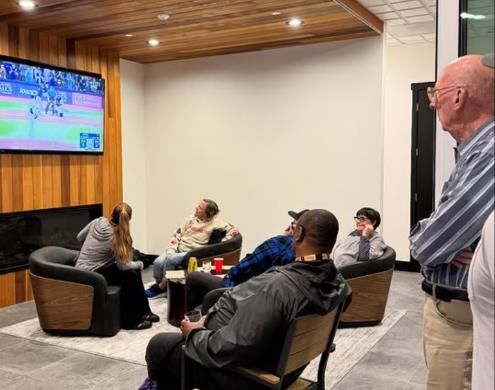


- Happy Residents:



- Community Service:


- Rock Scavenger Hunt: